design
After brainstorming a number of potential project ideas in class, I chose one of these ideas to investigate for this first assignment. The idea that I chose was named whirlibird, and this took the form of a propellor hat for dogs. Here's my original sketch from our brainstorming session:
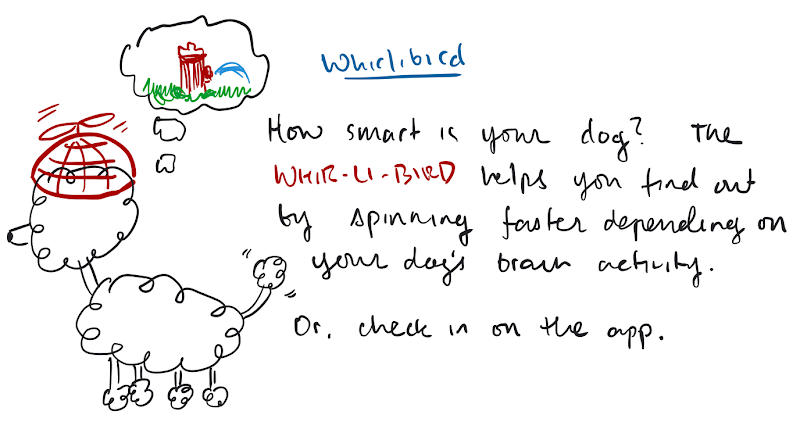
The purpose of this device is to enable dog owners to gauge the brain activity of their dogs. This could be useful, for example, when taking your dog on a walk, to identify locations or landmarks that are of particular interest to your dog. The device might work by registering the dog's brain activity through internal electrodes, which is processed by an onboard computer which then sends signals to the motor to spin the propellor. Adding bluetooth connectivity allows owners to pair whirlibird with their phone, to view real-time and historic brain activity data and show a heatmap of interesting locations created by combining whirlibird's brain sensors and the phone's location data.
The hat alone would likely not be enough space to house the motor, electrodes, electronics, and batteries, so this hat would most likely need to be attached to an additional module worn by the dog, such as a small backpack. Unfortunately, I wasn't able to explore the form factor for this part of the device in the week I had to work on this assignment, but it would be an interesting (and necessary) further exploration.
For this assignment, I wanted to investigate the form factor of the hat itself, including its comfort and fit on a dog, as well as its ease of use for the owner—particularly, the process of putting on and removing the hat. Alongside testing the physical model I created, I also wanted to evaluate the desirability of such a product for a dog owner.
prototype
To evaluate the idea, I created a low-fidelity analog 3D model of the hat. I wanted the hat to fit my roommate's Shorkie, Roxy, to be able to test it, so I started by finding a bowl that was relatively close to the size of Roxy's head. I used this bowl to create a sort of reverse mold of Roxy's head out of crumpled paper. This allowed me to build the hat upon a model of Roxy's head, without requiring her to sit still while I poke and prod around her head—a big ask for an impatient dog!
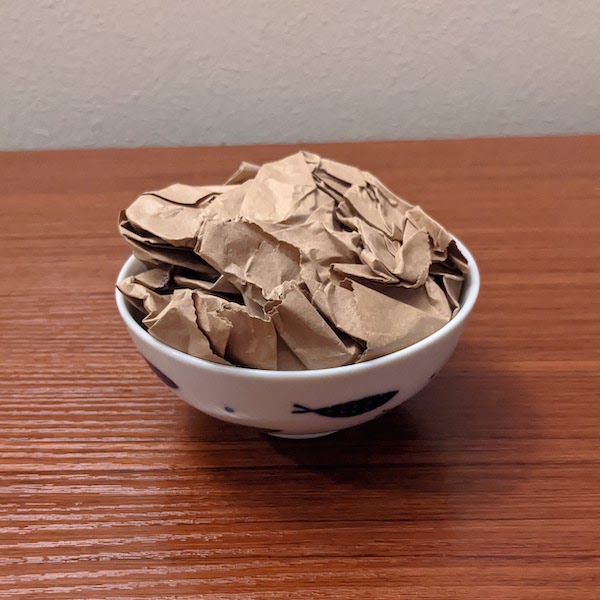
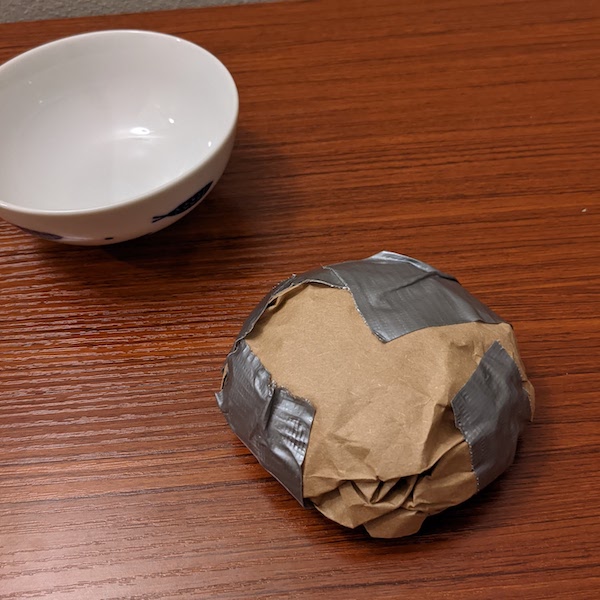
My Roxy's-head-sized-bowl and the paper I used to model Roxy's head
I then fit bubble-wrap over the fake head, applying tape over the bubble wrap to help it hold the shape of the head. After trimming off the excess, I had a layer of tape-covered bubble wrap that fit over the head. To add support and increase the thickness of the hat, I added a layer of cardboard, cut so that it could be bent down around the sides to match the form of the bubble wrap.
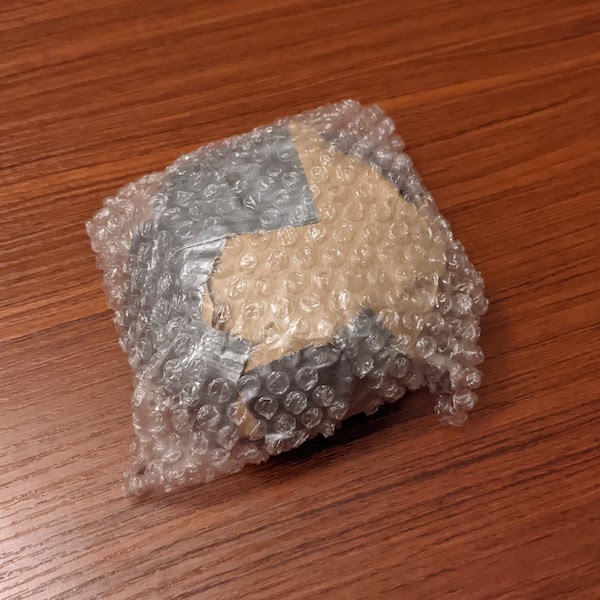
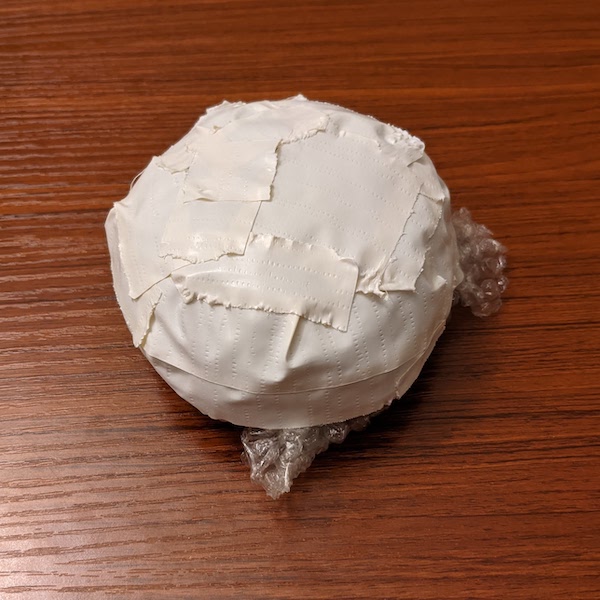
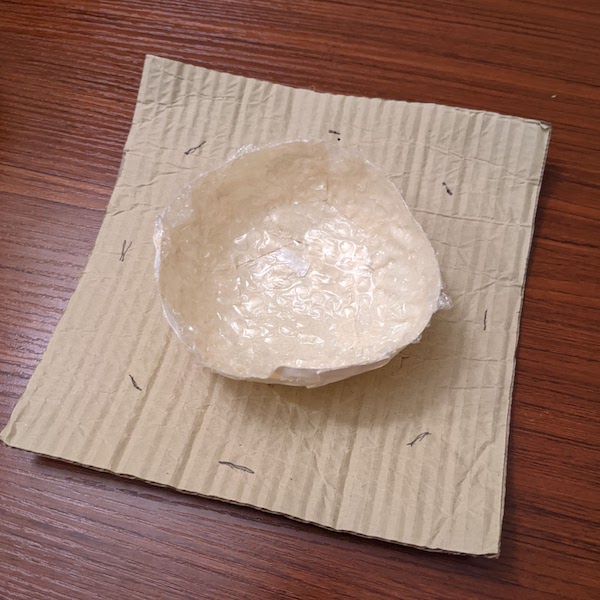
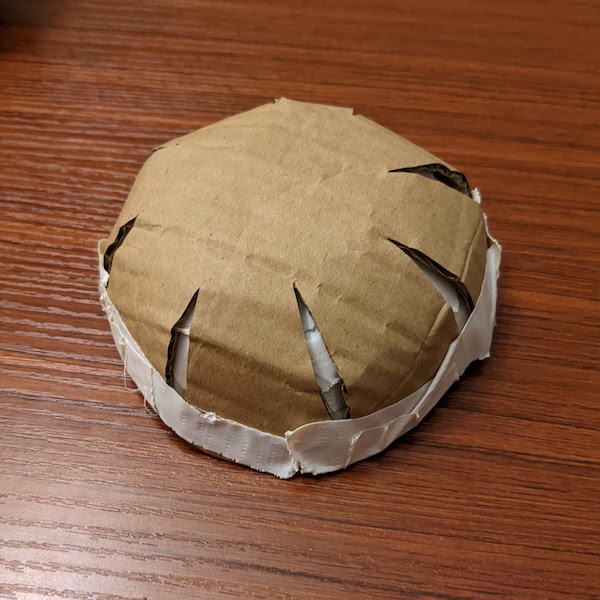
Adding bubble wrap, taping and trimming, then adding the cardboard layer
To create the propellor, I cut out two identical strips of cardstock into a bone shape, to add an element of fun to the hat. I initially wanted to make the propellor free to spin, but I didn't want to risk hurting Roxy by putting a pin through the top of the hat, so I settled on fixing the propellor in place for this model. I folded a tiny square of cardstock to use as a spacer, then glued all the layers together atop the hat to form the finished propellor.
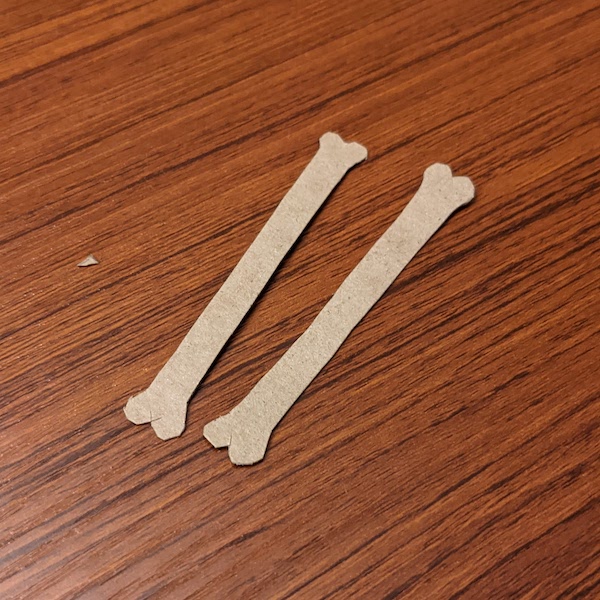
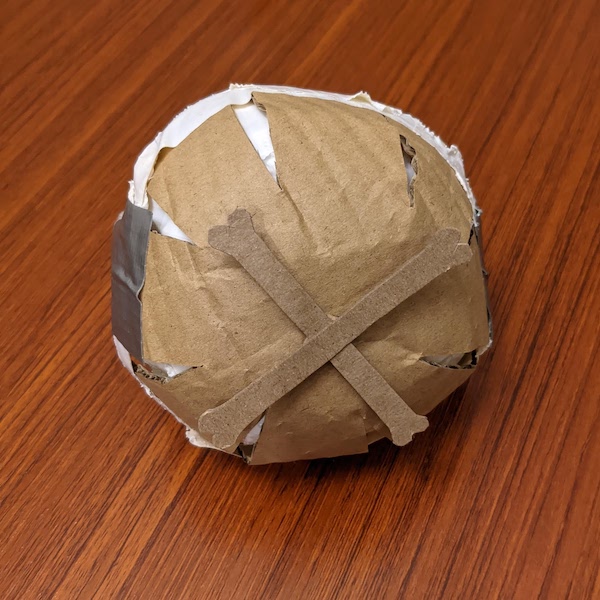
My bone-shaped propellor blades, and the assembled propellor
The only thing left to do was add a strap to keep the hat in place. I thought a strap would be more comfortable for a dog than clips, pins, or other methods of fixing the hat in place. For a more polished model, the strap would certainly need to be adjustable to suit individual dogs (of course, the entire hat would also need to come in a variety of sizes for large and small dogs), but I couldn't find a good way to create a sturdy but adjustable strap with the materials I had available, so I instead managed to use the real Roxy as a model to determine a suitable strap length. I cut the strap out of a strip of foam and used tape to attach it to the rest of the hat.
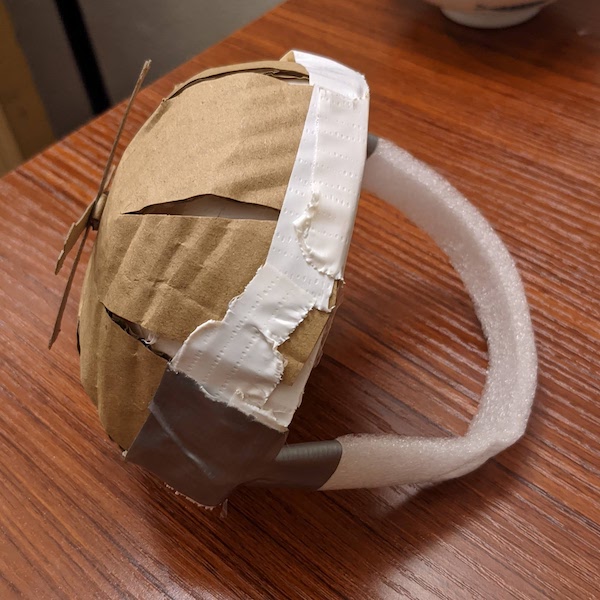
The finished product!
analysis
After building the model, I had the opportunity to test it out with Roxy and my housemates.
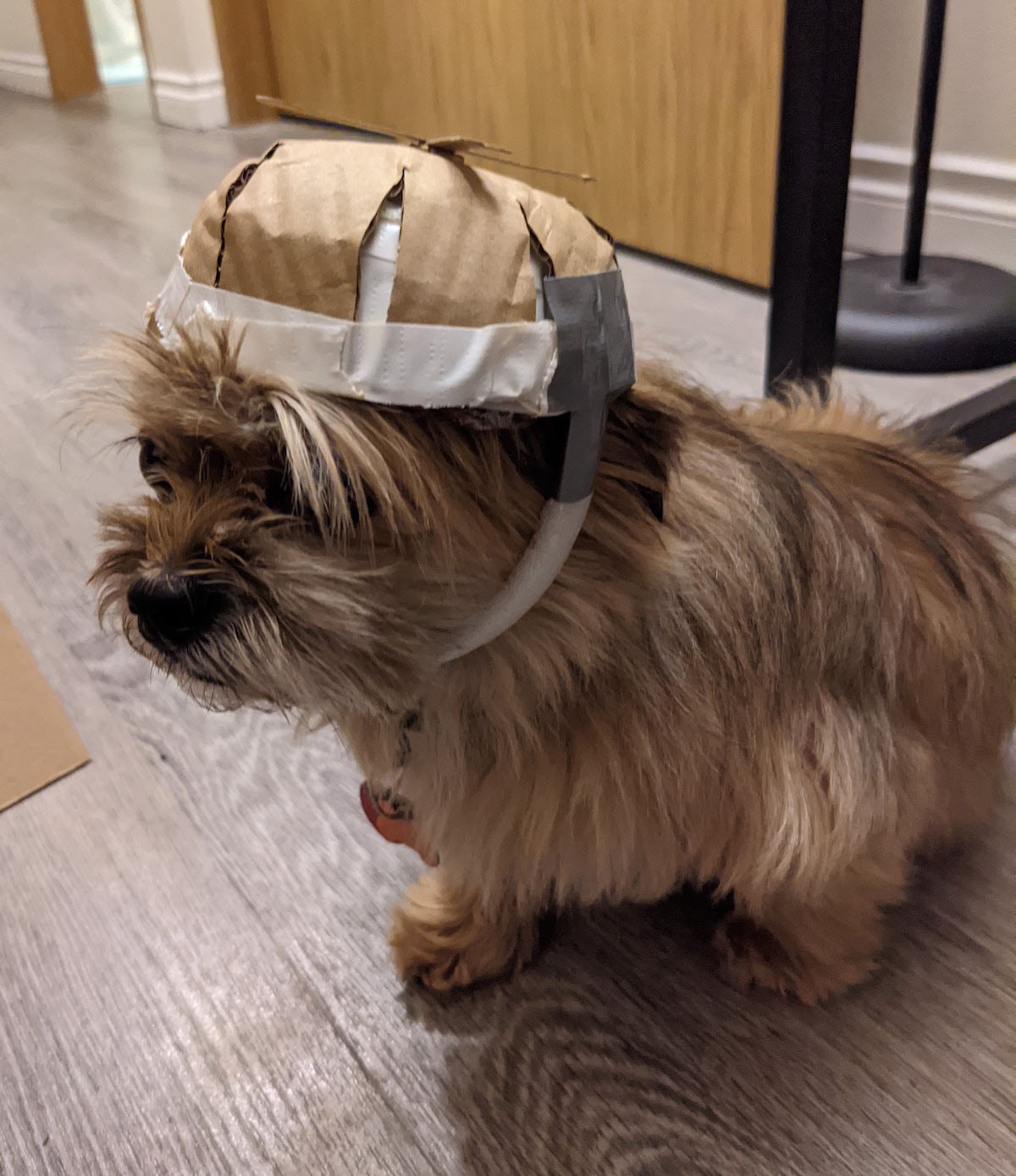
She's a star! 🤩
My housemates, as well as other people I showed it to, loved both my model and the concept. As I had predicted, the use of bones for the propellors was a cute touch that added delight for people interacting with the model. My housemates thought that it would be fun to be able to visualize Roxy's brain activity and stimulation as she interacts with the world.
The hat also fit Roxy quite well. It sat fairly solidly on her head, though it was perhaps just a tiny bit too large, as it could shift around somewhat. I had erred on the side of too-loose for the strap, so as not to hurt Roxy with it, and it turned out to be very easy to put on, but unfortunately it was too easy to take off.
As you can see, Roxy was not a huge fan. This wasn't a huge surprise, as dogs are often not super enthusiastic about new accessories, so I suspect that after a period of acclimation or some training, Roxy would become more comfortable with the hat. However, the larger problem was that Roxy could easily remove the hat herself—and she did so with little hesitation repeatedly. In a future iteration, a tighter fit and adjustable strap would definitely help with prevent dogs from taking it off on their own, while still allowing owners to remove the hat easily when not in use.
The other primary issue is that the hat covers and pushes down both of Roxy's ears. This is almost certainly uncomfortable for her, and also likely affects her hearing, which is an unwanted effect. Since I want to get an accurate reading of the dog's brain activity, affecting the dog's perception of the world is not ideal and obscures these readings—not to mention, it is simply rude to the dog to do so! This is an issue I'm still not entirely sure how to solve. Cutouts for the ears is one potential solution, but I suspect this may make the hat more difficult to put on and remove, and also could be more uncomfortable.
If I were to go through this process again, I would want to do more quick testing while creating the prototype and rapid iteration—for example, if I had tried the hat on Roxy before it was finished, I would have realized that it covered her ears and might have tried some different solutions. I also would want to explore variations with the shape and fit of the hat, and try using some different materials to achieve different thicknesses and weights. Overall, though, this was a super fun project to work on and a really interesting process. I have a tendency to push for perfection and obsess over details, so forcing myself to be quick and dirty and resist the "design finish fetish" was a great exercise for me.